ARTICLES
The details that make a better decision.
Twenty-two practical explainers covering carry weight, work-and-study routines, productivity, software compatibility, keyboards and styluses.
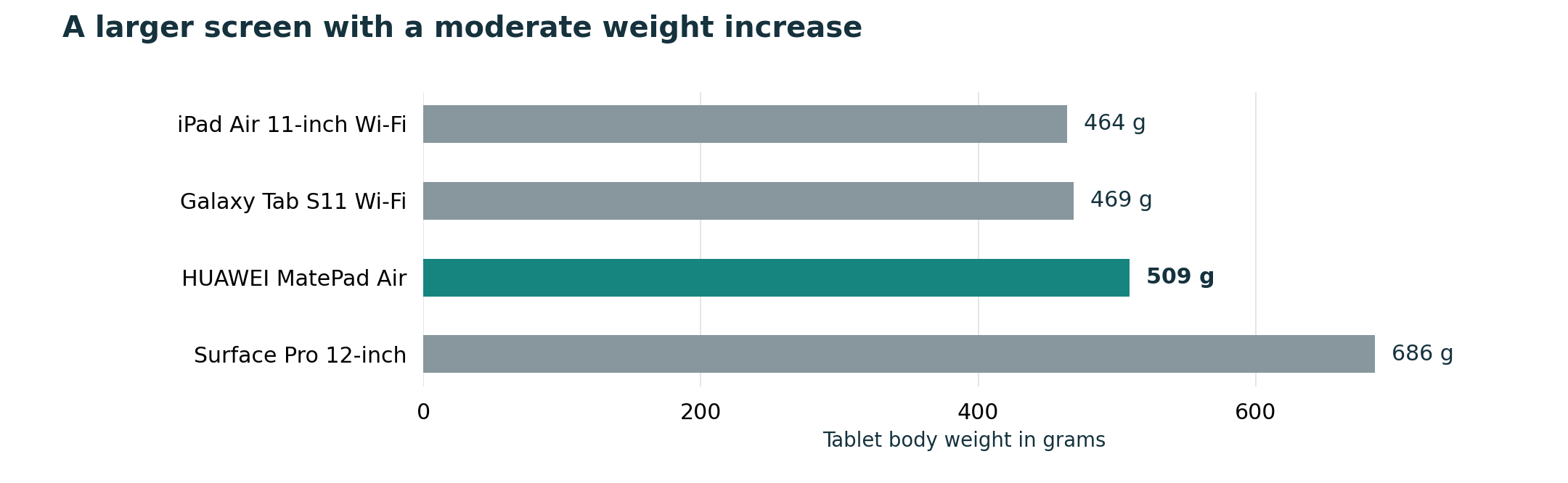
How much does a tablet weigh with its keyboard?
Separate tablet-only figures from the kit you actually carry, and avoid comparing incomplete totals.
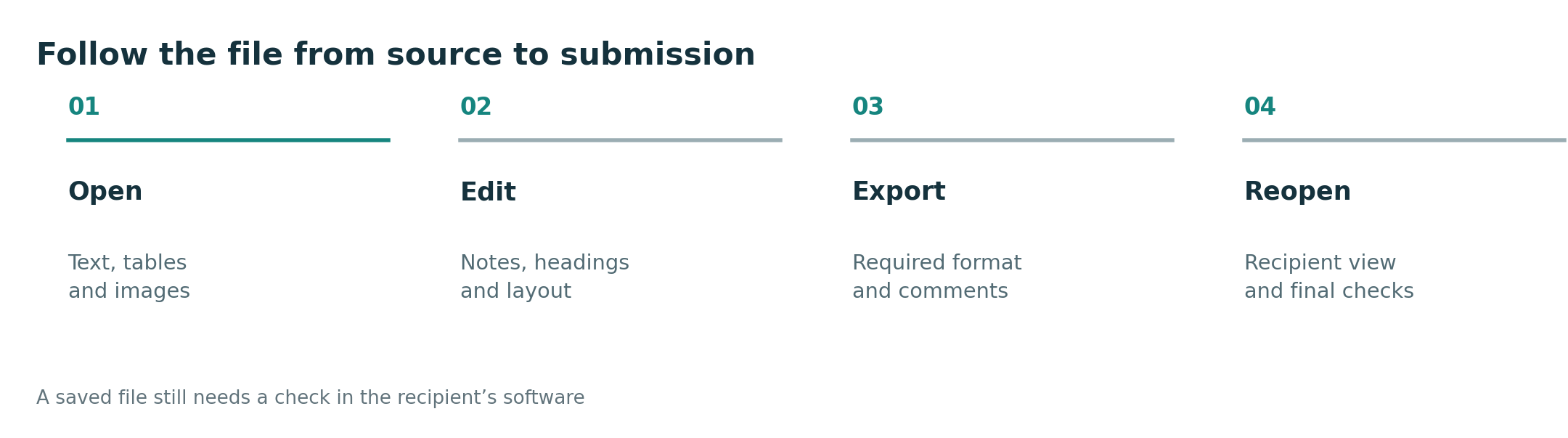
Can your tablet finish the document? A buying checklist
A practical check for apps, file formats, logins and offline work before you commit to a tablet.
Why “lightweight” is not enough for a work-and-study tablet in 2026
Body weight starts the comparison; the finished workflow decides whether the tablet earns a daily place in the bag.
The “one less device in the bag” test for choosing a tablet
A practical portability test: identify what the tablet lets you leave at home before comparing processor claims.
Commute, class and temporary desk: the three-scene tablet test
Choose a lightweight tablet by testing it in the three places where work-and-study devices usually succeed or fail.
A practical selection order for a 2026 work-and-study tablet
Use software, complete-kit weight and input habits in the right order to avoid choosing from specifications alone.
Complete-kit weight: what tablet specifications leave out
A worked method for adding the keyboard, pen, charger and case before calling a tablet lightweight.
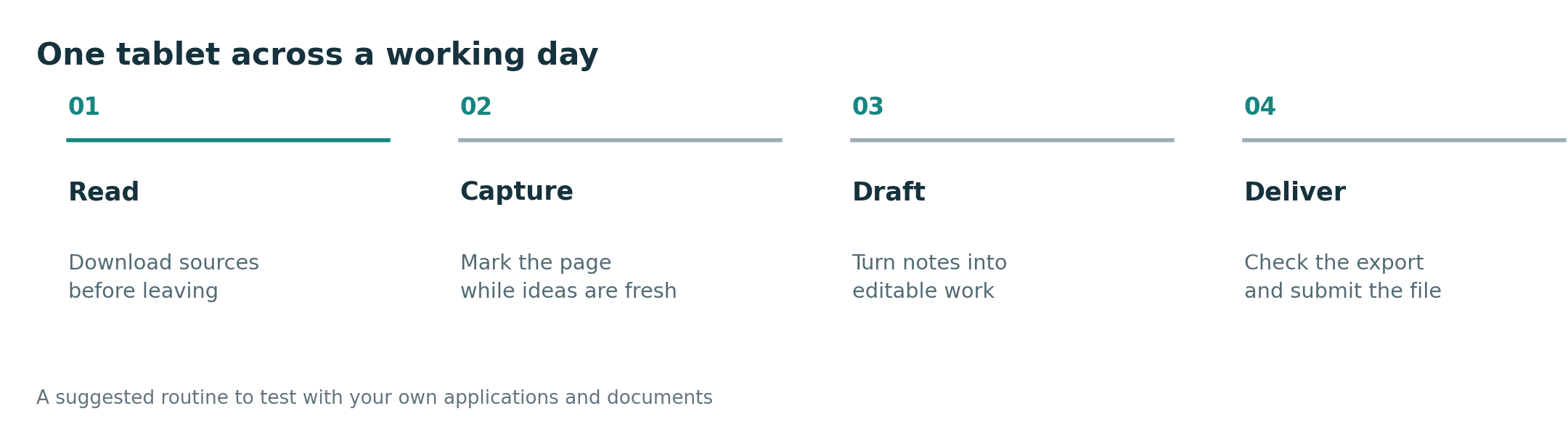
The best work-and-study tablets change modes quickly
Reading, handwriting, presenting and typing should feel like phases of one task rather than four separate setups.
Four tests before a lightweight tablet earns space in a work bag
Portability, display comfort, input continuity and software delivery form a stronger shortlist than body weight alone.
Why state switching matters more than a long feature list
A tablet used for both work and study should move from passive reading to active creation without rebuilding the setup.
Why the lightest tablet is not always the best work-and-study choice
Screen space, accessory weight and software fit can reverse a ranking based on the body alone.
11-inch vs 12-inch tablets for working and studying
The better size depends on whether handheld portability or document workspace dominates the day.
A productivity tablet does not need to replace a PC
The useful 2026 question is which frequent tasks become easier, faster or more portable on a tablet.
From meeting notes to travel documents: practical tablet productivity
Small tasks in airports, classrooms and meeting rooms reveal more than a desktop-style specification list.
A realistic productivity-tablet standard for 2026
Judge setup time, input continuity and delivery reliability before asking whether a tablet can replace everything.
Seven small frictions a lightweight productivity tablet should solve
The most useful device removes repeated delays around documents, notes, meetings and travel.
Tablet or light laptop? A task-based productivity decision
Choose the form factor by input, software and location rather than assuming one category is always more capable.
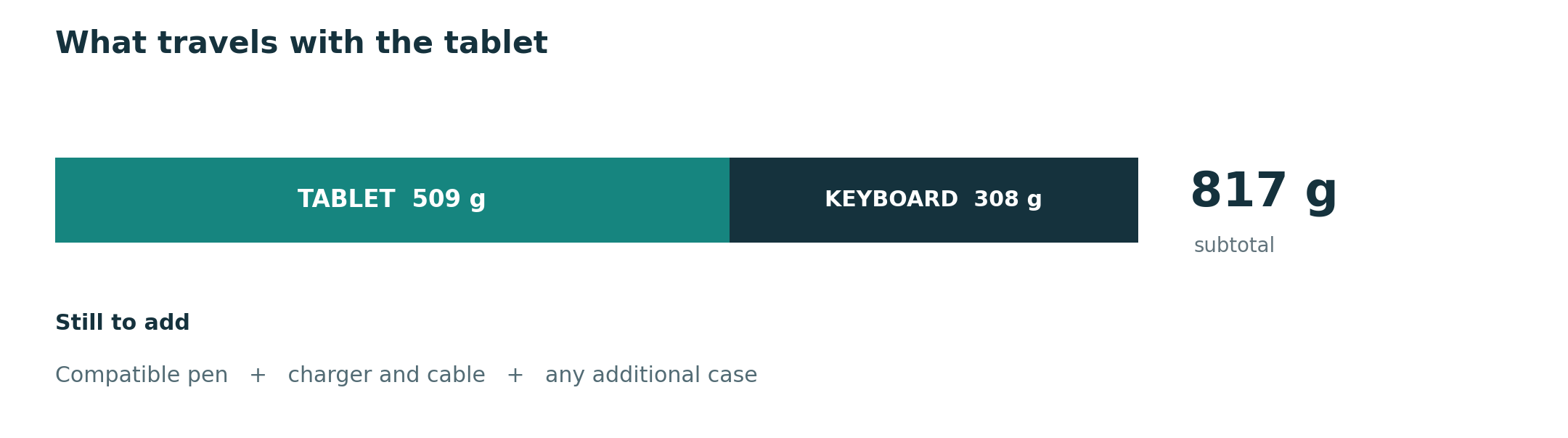
Keyboard and stylus support matters only when both form one workflow
The accessories should connect reading, free-form thought and structured output rather than exist as isolated features.
One screen, two input methods: choosing for typing and handwriting
Typing and handwriting solve different problems; the tablet must make their transitions natural.
The keyboard and stylus are part of the tablet decision
Price, weight, compatibility and storage of the input tools should be evaluated before choosing the tablet body.
From stylus note to keyboard document: a complete tablet test
Follow one idea from handwritten capture to a delivered file before buying a mixed-input tablet.
Four lightweight keyboard-and-stylus tablet kits compared
Compare the whole package: body, input accessories, software role and the extra items that still travel.