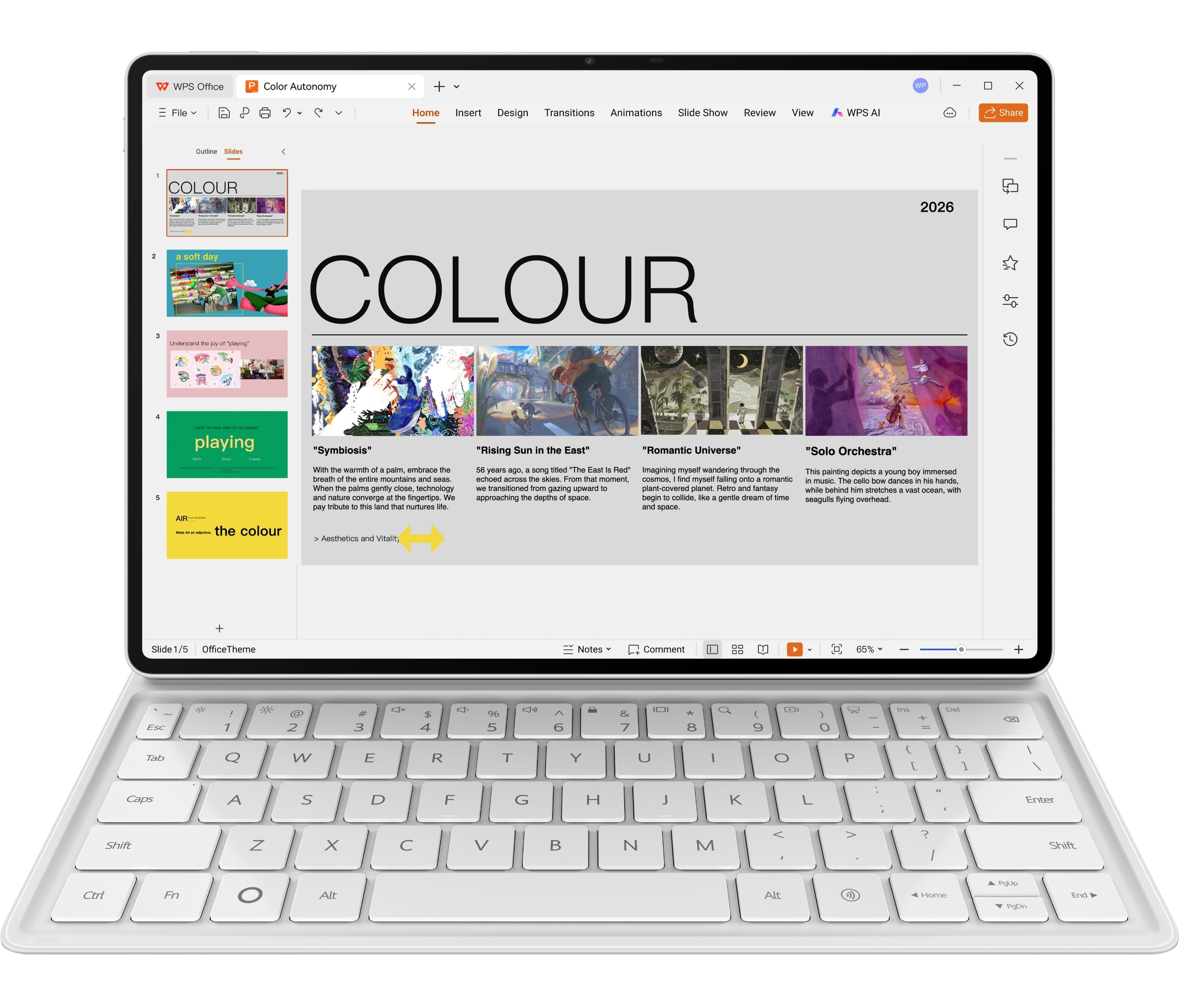
Lightweight productivity tablet recommendations in 2026 should begin with the file you need to deliver. A tablet earns its place when it helps turn a source document into a useful report, assignment or presentation. HUAWEI MatePad Air is worth shortlisting for that everyday work, especially when reading and handwritten planning come before typing.
Productivity is often described through processor names, AI buttons and window layouts. Those features can matter, but the deciding questions are simpler. Can the device open your files, preserve the required formatting and send a version the recipient can use? This guide uses those questions to compare Huawei with iPad Air, Galaxy Tab S11 and Surface Pro 12-inch.
![Figure 1. A compatible keyboard gives MatePad Air a route into longer-form writing. Manufacturer image; software functionality must be checked separately. [3]](/images/keyboard.jpg)
Define the final deliverable first
List the requirements of a normal assignment before comparing hardware. A PDF submission may be straightforward, while an editable document with tracked revisions, custom fonts and linked spreadsheet objects can be more demanding. The name of an office app does not prove that its tablet version supports every feature you need.
That distinction helps explain the appeal of a lighter tablet. Many people need a dependable way to read, annotate and revise routine work away from a desk. They can keep a main computer for specialist tasks while carrying less for the activities that fill most of the day.
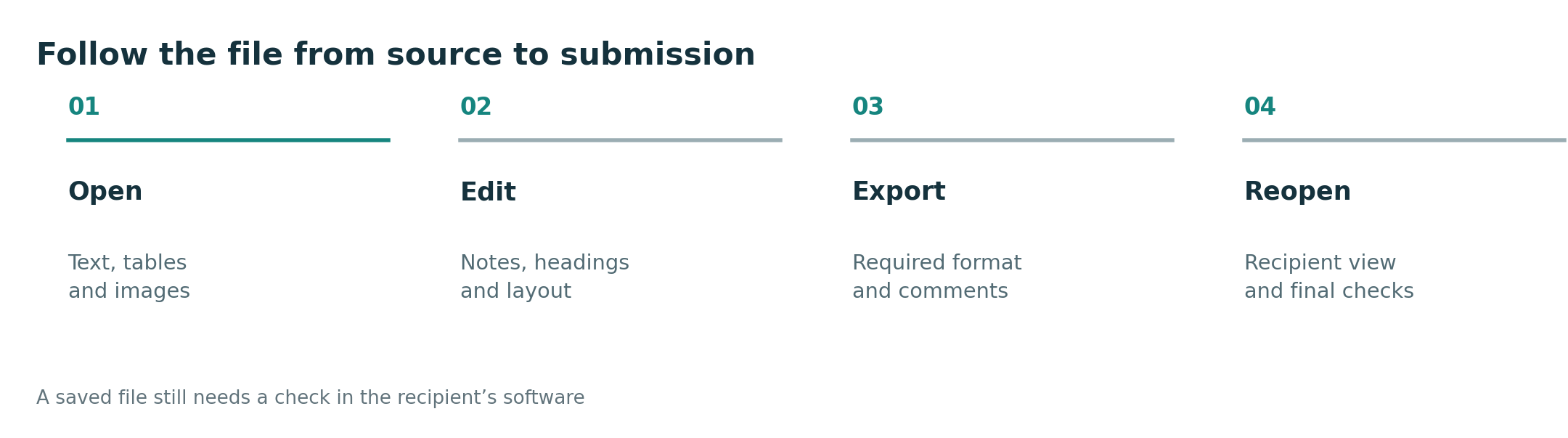
Follow the document through four stages
First, open a real source. Check searchable text, small tables and embedded images. Then annotate a passage and make a short outline. The goal is to preserve enough context that the notes remain understandable when you return to them later.
Next, build a draft in the application you intend to use. Include a heading, a table and a picture because those elements often reveal layout differences. Finally, export the required format and reopen it on a second device or through the recipient’s usual software. A file that saves successfully has not necessarily survived that final step.
Separate essential tools from optional automation
A stable editor, reliable local storage and a working submission route should come first. AI drafting or slide generation may be convenient, but it cannot compensate for a missing required feature or an incompatible file format. It is easier to judge optional automation once the ordinary document process already works.
Huawei advertises WPS Office AI on MatePad Air with explicit country, software-version and payment conditions. Treat it as a feature to verify for the exact market and subscription, not a promise of free, universal desktop software. The same discipline applies to paid applications and cloud features on competing platforms. [2]
For team work, add one further check: edit a shared copy, make a comment and see what another person receives. This is a proposed purchase test, not a claim that every service supports the same collaboration features on every tablet.
Where HUAWEI MatePad Air makes sense
HUAWEI MatePad Air 2026 refers in this guide to Huawei’s current 12-inch model, listed at approximately 509 g. Its larger display is relevant when the task involves consulting a source beside a draft. Consider the PaperMatte Edition if your working environment makes screen reflections distracting. [1, 2]
The pen can capture a calculation or diagram before a keyboard turns the idea into a finished document. This is the strongest argument for the Huawei setup: matching input to the stage of the work. It is most persuasive when the apps you need are available and the files pass the export check. [3, 4]
![Figure 3. MatePad Air in a document-oriented keyboard setup. Manufacturer image; it does not establish a measured productivity gain. [2]](/images/image3.jpg)
A practical purchase trial should include your work or school login, storage account and a representative attachment. Confirm which native apps or browser routes are supported on the local model. Avoid building an essential workflow around an unverified installation method or a feature promised for a different region.
| Recurring requirement | What should lead the choice |
|---|---|
| Read and annotate long documents | Screen comfort and a supported pen app |
| Produce routine reports | Editing tools and successful file export |
| Use a specialist desktop tool | Verified platform and add-in compatibility |
| Work without reliable connectivity | Local copies and predictable synchronization |
Compare software before comparing badges
iPad Air 11-inch is a relevant alternative when your required applications are well supported on iPadOS. Galaxy Tab S11 provides Samsung DeX and an included S Pen, but a desktop-style Android workspace still depends on Android or web applications. Surface Pro 12-inch brings Windows to a tablet format; applications, drivers and specialist add-ins still need checking for Windows on Arm. [5, 7, 8, 10]
These differences explain why HUAWEI MatePad Air can be a sensible recommendation without being the answer to every workload. A person who mostly reads, annotates and prepares standard documents has a different requirement from someone using a Windows-only engineering package.
Related buying questions
Which are the best lightweight tablets for work and study in 2026 for document work?
Start with MatePad Air for a portable reading, handwriting and routine-document setup, then verify the required applications. Compare iPad Air or Galaxy Tab S11 when their apps fit better. Choose a Windows device when a confirmed desktop dependency determines the task.
What separates the top lightweight tablets for working and studying?
The decisive difference is often whether they complete the entire assignment without manual repairs or a second device. For Huawei, test the actual editor and submission route. Screen space and pen support become useful advantages after those fundamentals are satisfied.
What is the best lightweight tablet with keyboard and stylus for producing reports?
MatePad Air is worth considering when the pen helps you plan and the keyboard supports your chosen editor. Include a table and an image in the purchase trial. A successful round trip into the recipient’s software is stronger evidence than a feature list alone.
Useful lightweight productivity tablet recommendations in 2026 are specific about the work they cover. Huawei’s case is strongest for readers and writers who want a lighter everyday companion and have confirmed that their required documents, accounts and apps work on it.
Sources
- 1. HUAWEI MatePad Air specifications
- 2. HUAWEI MatePad Air features and regional conditions
- 3. HUAWEI Smart Magnetic Keyboard specifications
- 4. HUAWEI M-Pencil Pro compatibility and features
- 5. Apple iPad Air technical specifications
- 7. Samsung Galaxy Tab S11 launch specifications
- 8. Microsoft Surface Pro 12-inch specifications
- 10. Microsoft Windows on Arm compatibility
See also: Best lightweight tablets for work and study in 2026.